
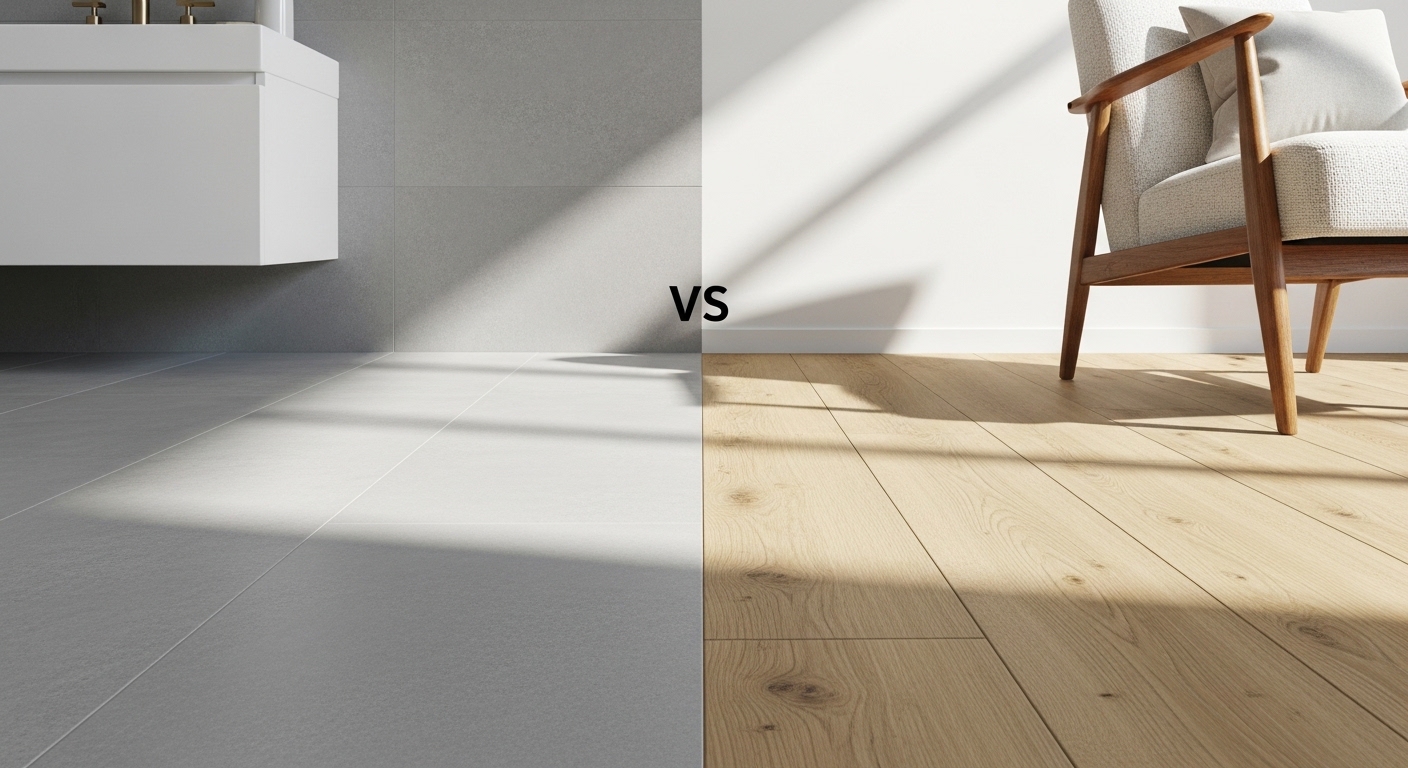
Tile or Laminate? A Complete Comparison for London Ontario Homeowners (2026)
Walk into any flooring showroom in London, Ontario, and you'll face this question almost immediately: tile or laminate? Both are popular. Both are affordable relative to hardwood. But they perform very differently depending on the room, the household, and what you actually need from a floor. Choose the wrong one and you'll know it within a year — either from cold feet every morning, a cracked tile by the door, or a laminate edge that's starting to lift near the sink.
This guide is for London homeowners who want a straight answer. We'll compare tile and laminate across every dimension that actually matters: cost, durability, comfort, water resistance, installation complexity, and resale value. By the end, you'll know exactly which floor is right for each room in your home — and why.
Part 1: Understanding What You're Actually Comparing
Before diving into a head-to-head comparison, it helps to be clear about what "tile" and "laminate" actually mean in 2026 — because both categories have evolved considerably.
What Is Tile?
For most residential projects in London, "tile" means porcelain or ceramic tile. Porcelain is denser, harder, and more water-resistant than ceramic, making it the more common choice for floors. Natural stone (marble, slate, travertine) is also a tile option, but it carries a significant price premium and requires more maintenance. Unless specified otherwise, this guide focuses on porcelain tile as the standard comparison point.
What Is Laminate?
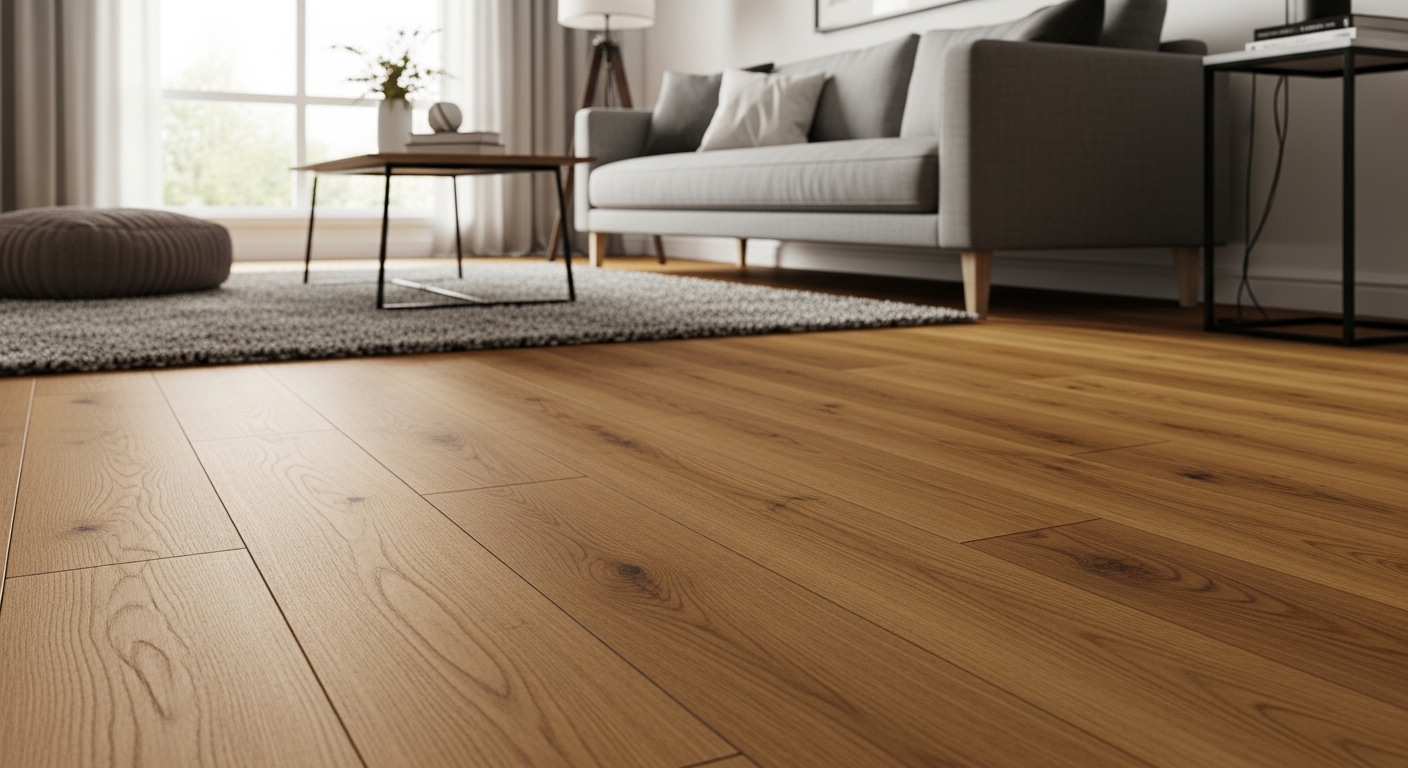
Modern laminate is a multi-layer synthetic product with a high-density fiberboard (HDF) core, a photographic layer that mimics wood or stone, and a protective wear layer on top. The quality gap between budget laminate and premium laminate is significant. If you're budgeting for your flooring project, it's worth investing in a thicker core and a proper AC rating for the rooms you're installing it in.
Part 2: Cost Comparison — Material and Installation
Cost is usually the first filter homeowners apply, and it's where the comparison gets nuanced. The sticker price per square foot is only part of the picture. Installation complexity and prep requirements often matter more.
Laminate: Material + Labor
- Material: $2.50 – $6.00 per sq. ft. (quality range)
- Installation labor: $2.00 – $4.00 per sq. ft. (click-float method)
- Underlay: $0.30 – $0.70 per sq. ft. (if not pre-attached)
- Total installed range: approximately $5.00 – $10.00 per sq. ft.
Laminate installs quickly using a floating click-lock system, which keeps labor costs lower. The subfloor does need to be reasonably flat — if your home has significant dips or humps, subfloor leveling adds to the total cost.
Tile: Material + Labor
- Material: $5.00 – $15.00 per sq. ft. (porcelain, standard to premium)
- Installation labor: $8.00 – $15.00 per sq. ft.
- Substrate, mortar, grout: $1.00 – $2.50 per sq. ft.
- Total installed range: approximately $14.00 – $32.00 per sq. ft.
Tile is significantly more expensive to install. The mortar-set process is labor-intensive, and tile demands a very flat, rigid subfloor to prevent cracking. In older London homes where subfloors move slightly with seasons, this prep investment is not optional — it's what determines whether your tile grout cracks in year two or year twenty.
Bottom line on cost: Laminate wins on upfront cost in almost every scenario. But tile's durability often means lower long-term cost — it rarely needs to be replaced if it's installed correctly.
Part 3: Water Resistance — The Most Important Factor for Many Rooms
This is where tile wins decisively, and it matters enormously for certain rooms in your home.
Tile: Effectively Waterproof
Porcelain tile has water absorption of less than 0.5% — for practical purposes, it is waterproof. The grout lines are the only potential vulnerability, and a quality epoxy grout or properly sealed sanded grout handles that. For bathrooms, mudrooms, laundry rooms, and any area with direct water exposure, tile is the unambiguous choice. It won't warp, swell, or grow mold under normal conditions.
Laminate: Water-Resistant, Not Waterproof
Standard laminate has an HDF core that swells when water penetrates the joints. Even "water-resistant" laminate — which is treated on the surface — can suffer damage if standing water sits on it for extended periods or gets underneath through seams. Laminate should not be used in wet rooms (bathrooms, shower areas) or basements with known moisture issues. If you want a waterproof floating floor, SPC vinyl is the better option in those zones.
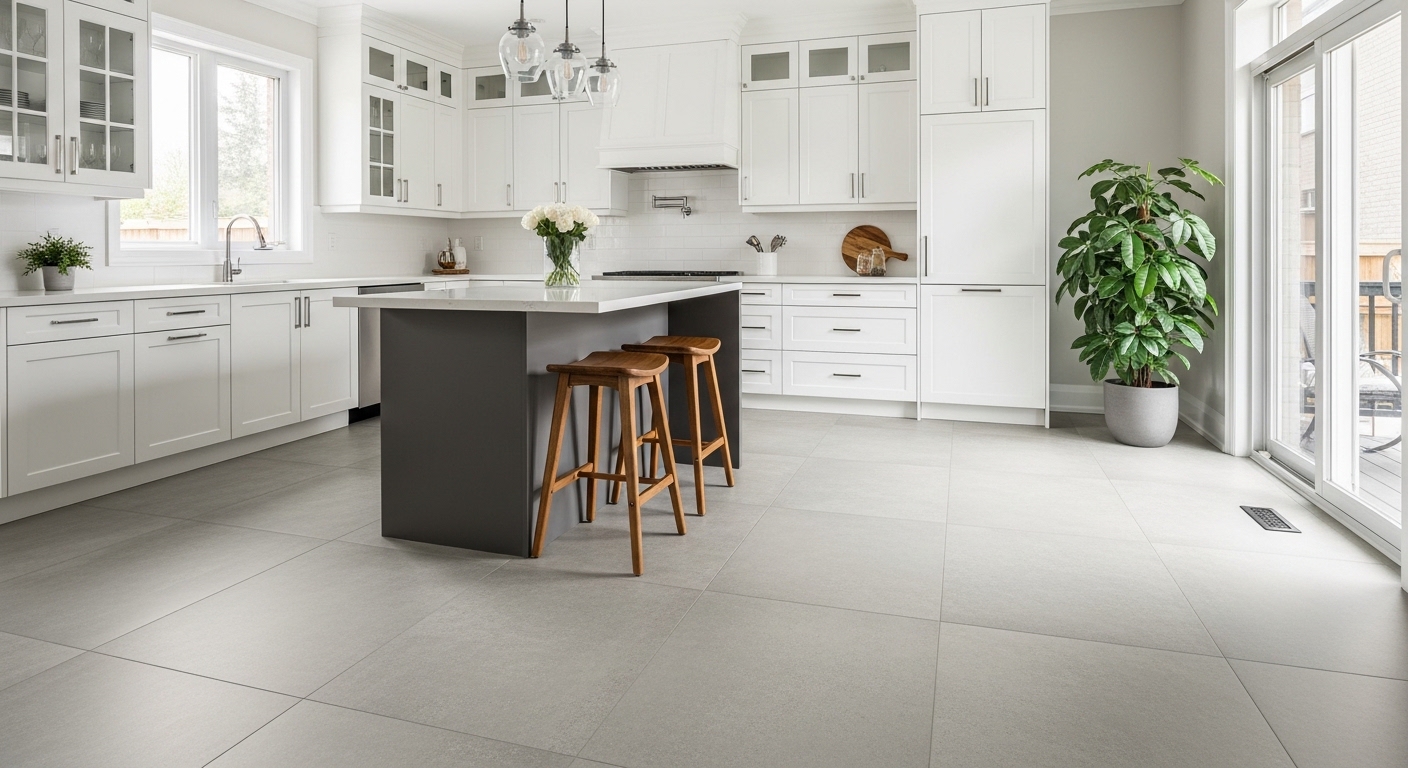
Bottom line on water resistance: Tile wins. For kitchens, laundry rooms, entryways, and all wet rooms, tile is the safer and more durable choice.
Part 4: Durability and Longevity
How long will each floor actually last in a London home? The honest answer depends on the quality of installation as much as the product itself.
Tile Durability
Porcelain tile is extremely hard and scratch-resistant. It won't dent, fade, or wear down under normal foot traffic. A properly installed tile floor can last 20 to 50+ years — sometimes longer than the house itself. The risks are cracking from impact (heavy objects dropped) and grout deterioration over time, both of which can be repaired without replacing the entire floor.
Laminate Durability
Quality laminate (AC3 or AC4 rated) is more durable than most people expect. It resists scratches well, handles moderate traffic, and doesn't fade significantly under normal light exposure. A realistic lifespan in a London home is 10 to 20 years, depending on traffic, maintenance, and whether the subfloor was properly prepared. The main failure modes are edge moisture damage, wear-through in high-traffic paths, and locking joint failure on poorly leveled subfloors.
Bottom line on durability: Tile has a longer lifespan when installed correctly. Laminate is perfectly durable for most households but will need replacement sooner.
Part 5: Comfort and Feel Underfoot
This is where laminate wins clearly — and it's a factor London homeowners often underestimate until winter arrives.
Tile: Hard and Cold
Tile is dense, rigid, and conducts heat away from your feet. In a London winter, an unheated tile floor feels noticeably cold first thing in the morning. The hardness also means less comfort for standing — if you're cooking for an hour on a tile floor, you'll feel it in your legs. Radiant in-floor heating (electric or hydronic) solves the cold problem but adds cost to an already expensive installation.
Laminate: Warmer and Softer
Laminate has a wood-based core that retains warmth and provides slight underfoot give. With a quality foam or cork underlay, it feels noticeably more comfortable to walk and stand on. For bedrooms, living rooms, and main-floor areas where comfort matters, laminate has a real advantage in day-to-day livability.
Bottom line on comfort: Laminate wins. It's warmer, softer, and more comfortable — particularly in living spaces where you spend long periods standing or sitting on the floor.
Part 6: Installation — Complexity and Timeline
Laminate Installation
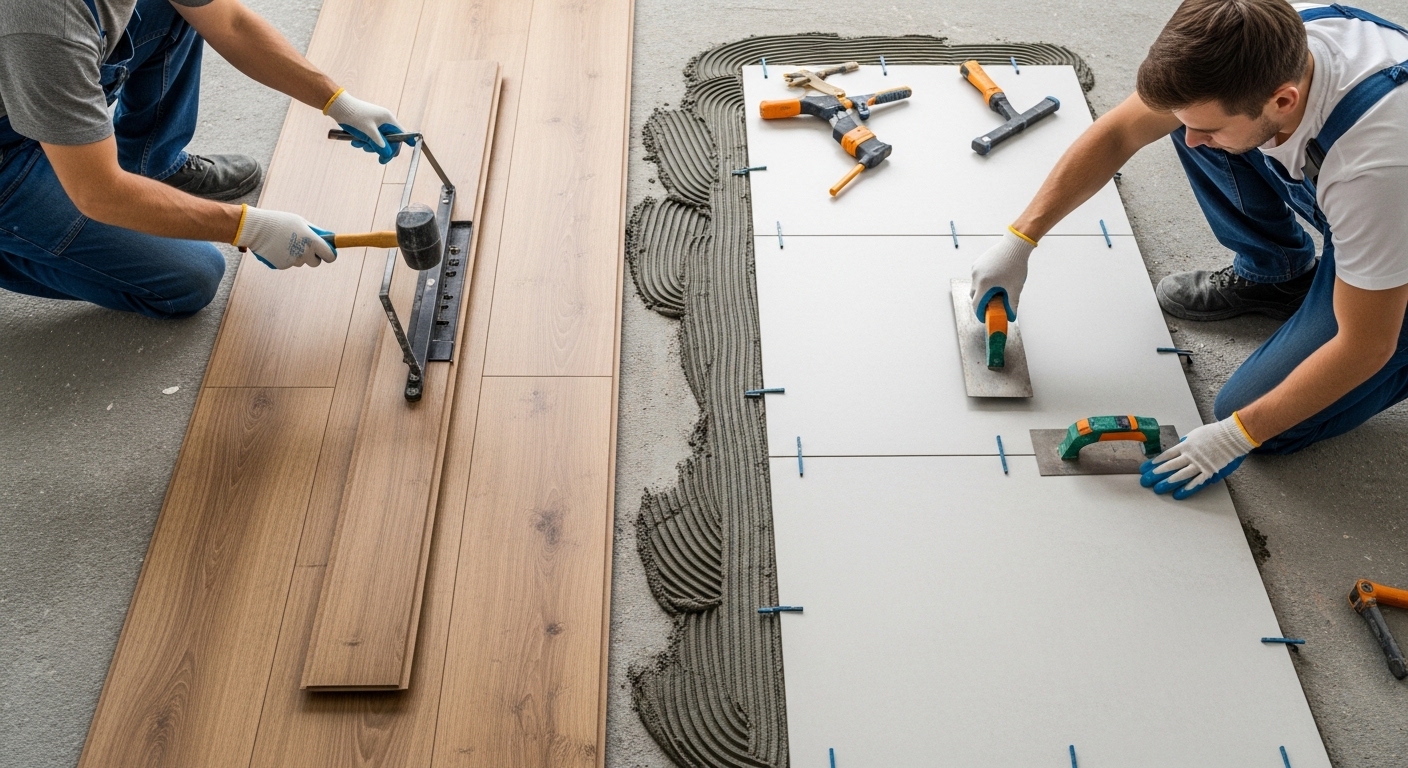
Laminate uses a floating click-lock system — planks snap together and rest on top of the subfloor without adhesive or fasteners. A typical room can be completed in a single day. You can walk on it immediately and furniture can go back within hours. This makes laminate a lower-disruption option, especially for homeowners living in the space during renovation.
Tile Installation
Tile is a mortar-set system. The subfloor must be clean, flat, and structurally sound before any tile goes down. The mortar needs to cure (typically 24 hours before grouting), and the grout needs to cure before the area can take heavy foot traffic — often 48 to 72 hours total before the room is usable. Larger format tiles and complex patterns extend the timeline further. If you're tiling a bathroom or kitchen, plan to be without that space for several days. For a detailed look at what tile installation involves in London homes, preparation and timeline expectations are worth reviewing before you commit.
Bottom line on installation: Laminate is faster, less disruptive, and easier to replace if something goes wrong. Tile takes longer and requires more skilled labor but is more permanent once set.
Part 7: Maintenance and Cleaning
Tile Maintenance
Tile itself is very easy to clean — a damp mop handles most messes and it won't absorb stains. The weak point is grout, which can discolor over time and harbor bacteria in poorly sealed joints. Regular grout sealing (every one to two years in high-traffic areas) keeps it looking clean and prevents long-term deterioration. Avoid harsh acidic cleaners on natural stone tile, but standard porcelain handles most household cleaners without issue.
Laminate Maintenance
Laminate is also straightforward to maintain — dry mopping and occasional damp mopping is all it needs. The key rule is to avoid excessive water. Standing liquid, wet mopping, and steam cleaners are the enemies of laminate longevity. For pet owners, claw scratches on lower-quality laminate can accumulate over time; an AC4-rated product handles this much better than a budget option.
Bottom line on maintenance: Both are easy to maintain day-to-day. Tile requires periodic grout attention; laminate requires water discipline. Neither is demanding compared to hardwood or carpet.
Part 8: Resale Value in London Ontario
If you're renovating with an eye on resale, the flooring choice matters — but context matters more. What buyers expect depends heavily on the price range and neighborhood of your home.
When Tile Helps Resale
Buyers notice tile immediately in bathrooms and kitchens. A clean, well-installed tile floor signals quality and low maintenance. In those specific rooms, tile almost always adds more perceived value than laminate. A dated or damaged tile floor, however, can hurt more than no update at all — so condition matters.
When Laminate Affects Resale
In mid-range London homes, quality laminate in living and bedroom areas is generally neutral to positive for buyers. It reads as clean, modern, and practical. Where it becomes a liability is in premium homes, where buyers often expect hardwood — or in basement spaces where moisture performance becomes a concern. If you're weighing options for your main living areas, our flooring and resale value guide for London walks through which choices perform best by neighborhood and price tier.
Bottom line on resale: Tile wins in wet rooms. Laminate is competitive in living spaces for mid-range homes. Neither is a mistake if installed well and chosen appropriately for the space.
Part 9: Room-by-Room Recommendation
Still not sure which to choose? Here's a direct room-by-room breakdown for London homes:
- Bathroom: Tile, always. Laminate has no place in a wet room.
- Kitchen: Tile for heavy use and spills; laminate is acceptable in lower-traffic kitchens with careful water management.
- Mudroom / entryway: Tile — it handles grit, salt, snow melt, and boots without damage.
- Living room: Laminate — warmer, quieter, more comfortable underfoot.
- Bedrooms: Laminate — comfort and warmth matter more than waterproofing here.
- Basement: Neither, ideally — waterproof SPC vinyl is more appropriate for slab-on-grade moisture conditions.
- Laundry room: Tile — any appliance leak makes laminate a risk.
Conclusion: Choose the Floor That Fits the Room, Not Just the Budget
The tile vs. laminate debate doesn't have a single winner — it has a right answer for each room. Tile is the superior choice wherever water, heavy traffic, and long-term durability are priorities. Laminate wins where comfort, warmth, budget, and speed of installation matter most.
For most London homeowners, the smartest approach is a combination: tile in bathrooms, the kitchen, entryway, and laundry room; laminate (or SPC vinyl) in living areas, bedrooms, and finished basement spaces. That hybrid approach gives you the best of both materials where each performs strongest.
If you're ready to get accurate pricing for your specific rooms and subfloor conditions, the best next step is a professional assessment. Every home in London is different — and the variables that affect your quote (subfloor flatness, moisture levels, room geometry, existing transitions) are almost impossible to price accurately without seeing the space. Contact our team to book a free in-home consultation and get a clear, itemized estimate with no surprises.